Playlist Politics: How the New Streaming Economy Is Leaving Independent Canadian Artists Behind
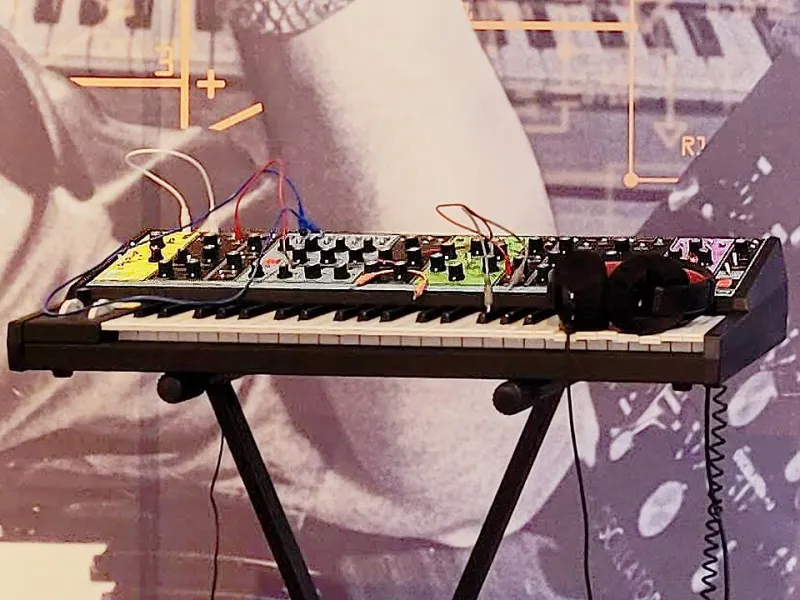
Photo: Moog Claravox Centennial Theremin (left), Moog Matriarch (center), and Moog modular synthesizer (right), with wall art of Robert Moog - Moog Music Factory, Asheville, NC (2021-08-04 11.08.58 by Charity Davenport @Flickr 51644541617).jpg: (Flickr: M
Let's get something straight right off the top: streaming didn't kill payola. It rebranded it, cleaned it up, gave it a Silicon Valley haircut, and sent it back out into the world wearing an algorithm as a disguise.
For anyone who spent time in the Canadian music industry before the Spotify era, the mechanics of radio promotion are painfully familiar. You knew which records got pushed, you had a rough sense of why, and even if the system was tilted, at least the tilt was visible. What's happening now in the playlist ecosystem is something slipperier — and for independent Canadian artists trying to build a career without a major label's chequebook behind them, it's worth pulling back the curtain.
The Playlist Is the New Radio
If you want to understand where discovery actually happens on streaming platforms today, you have to understand the playlist. Editorial playlists — the ones curated by Spotify, Apple Music, or Amazon Music's in-house teams — carry enormous algorithmic weight. Getting placed on something like Spotify's "Fresh Finds" or Apple Music's "New in Singer-Songwriter" doesn't just mean a few thousand streams. It triggers a cascade: the algorithm notices the engagement, pushes the track into more Discover Weekly queues, and suddenly an artist from Sudbury or Saskatoon is landing in ears in Stockholm.
The problem is that access to those placements is not remotely equal.
Major labels have dedicated streaming relations teams whose entire job is to pitch editorial playlists. They have relationships. They have data packages. They show up to meetings. An independent Canadian artist submitting through Spotify for Artists' pitch tool — which is the officially sanctioned pathway — is competing in a system where that tool is genuinely one of the least powerful levers available.
The Pitching Industry That Grew in the Gap
Into that gap stepped a cottage industry of playlist pitching services. And this is where things get genuinely murky.
Some of these services are legitimate. They represent curators who run third-party playlists — the kind with names like "Chilled Acoustic Vibes" or "Canadian Indie Gems" — and they broker placement for a fee or through submission platforms like SubmitHub or Groover. A well-placed third-party playlist can move the needle for an independent act, especially if the curator has built a real, engaged following.
But a significant chunk of this industry operates in ethically grey — or outright fraudulent — territory. Playlist farms, where streams are generated by bots or click farms, have been documented extensively. Paying for placement on playlists with inflated or fake follower counts doesn't just waste an artist's money; it can actively flag their account for suspicious activity on the platform. Spotify has pulled tracks and even terminated accounts over this.
For a Canadian independent artist with a modest budget — maybe they set aside $500 from their FACTOR grant to spend on digital promotion — the risk of getting burned by a bad actor in this space is very real. And the information asymmetry is brutal. How is a musician from Moncton supposed to know which pitching services are legitimate?
The Algorithmic Feedback Loop Nobody Talks About
Here's the part that doesn't get discussed enough: the algorithm doesn't just reward popularity. It rewards a very specific kind of engagement, measured in ways that inherently favour certain genres and listening contexts.
Tracks that get added to personal libraries, skipped less often, and listened to in full perform better in algorithmic recommendations. That sounds neutral until you realize it systematically advantages music designed for passive listening — lo-fi, ambient, acoustic background fare — over challenging, genre-pushing, or culturally specific work.
A lot of the most interesting music coming out of Canada right now — Indigenous hip-hop, experimental electronic work, genre-blending folk from Québec — doesn't fit neatly into the listening contexts the algorithm has been trained to reward. It demands attention. It rewards active listening. And it gets penalized for that in ways that are invisible and nearly impossible to appeal.
What Canadian Artists Can Actually Do
None of this is meant to be defeatist. The landscape is genuinely harder than the streaming platforms' marketing would have you believe, but there are real strategies that work.
Get serious about the Spotify for Artists pitch tool — but do it right. Submit at least seven days before release. Write a pitch that tells a story, not just genre tags. Mention any Canadian press, radio play, or live momentum you've built. Context matters.
Build relationships with legitimate independent curators. Platforms like SubmitHub let you see curator acceptance rates and response times before you spend credits. Look for curators who actually listen and leave feedback — that's a sign of a real operation.
Don't sleep on CBC Music and Canadian digital radio. CBC Music's streaming presence is underutilized by a lot of independent artists. Getting added to a CBC Music playlist carries real credibility and sometimes triggers Spotify's editorial attention.
Think about your release timing strategically. Pitching into a crowded Friday release cycle means you're fighting thousands of other tracks for the same editorial attention. Some artists have found real success releasing on Tuesdays or Wednesdays, when editorial inboxes are less flooded.
Treat your existing listeners like gold. The algorithm responds to saves, playlist adds, and repeat listens. Ask your fans — directly, explicitly — to save your track rather than just streaming it. That one behavioural shift can meaningfully change how a release performs.
The Bigger Picture
The streaming payola problem isn't going to be solved by individual artists making smarter decisions. It needs structural attention — from FACTOR, from SOCAN, from the CRTC's ongoing conversations about Canadian content in the digital era. The Broadcasting Act modernization has started to address some of this, but the speed of policy rarely matches the speed of platform evolution.
What Canadian artists can do in the meantime is go in with eyes open. The playlist economy is real, the advantages are unevenly distributed, and pretending otherwise doesn't serve anyone. But understanding the mechanics — knowing which levers actually move and which ones are just there to make the system look fair — is the first step toward working it on your own terms.
The music is good. It's always been good. The infrastructure around it just needs some honest scrutiny.