Nobody's Holding the Door Anymore: What Happens When Canadian Artists Stop Waiting for Permission
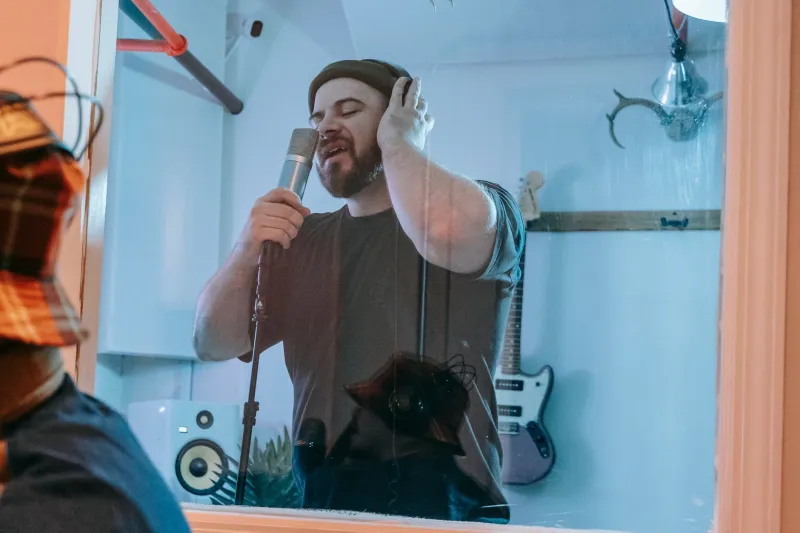
There used to be a very specific kind of phone call that could change a Canadian musician's life. It came from a label A&R rep, maybe someone with a Bay Street office and a roster that read like a CanCon playlist, or occasionally from a scout who'd caught your Thursday night set at a bar in Kensington Market. The call meant you'd been seen. Vetted. Approved. Without it, you were playing the long game in a system that didn't particularly care how long you waited.
That call doesn't carry the same weight anymore. In a lot of cases, it doesn't come at all.
The erosion of traditional music industry gatekeepers — A&R executives, major label development scouts, radio programmers with the power to make or bury a single — has been building for a long time. But somewhere in the last five or six years, it stopped feeling like a slow shift and started feeling like a structural collapse. The institutions are still there, technically. The infrastructure just doesn't function the way it once did, and the artists who've figured that out earliest are the ones rewriting what a Canadian music career can actually look like.
The Old Architecture and Why It Mattered
To understand what's changed, it helps to remember what the old system was actually built on. Major labels weren't just distribution machines. They were gatekeeping operations with real resources behind the gate — marketing budgets, radio promotion teams, connections to booking agencies, and crucially, the credibility signal that came from being signed in the first place. If a label believed in you enough to spend money on you, the rest of the industry had a shorthand reason to pay attention.
Canadian radio added another layer. CRTC content regulations meant that CanCon requirements created genuine airplay opportunities for domestic artists — but those opportunities were still filtered through programmers who made choices about which Canadian music counted as worth spinning. Getting added to a playlist at a major market station was a career event. Not getting added could quietly stall momentum that took years to build.
For a lot of artists, this system was suffocating. But it was also legible. You knew who the decision-makers were. You knew, roughly, what they wanted. And if you could get in front of them — through a manager, a lawyer, a well-timed showcase — you had a map of sorts.
When the Map Stops Working
The map is largely useless now, and that disorientation is real. Talk to independent Canadian artists navigating their careers in 2024 and you'll hear two things almost simultaneously: relief and vertigo.
The relief comes from the obvious stuff. You can record a track in your apartment in Hamilton, distribute it globally through a platform that costs you next to nothing, build a following on TikTok or Instagram without ever pitching to a label, and generate streaming revenue — modest as it often is — without anyone's approval. The gatekeepers being gone means the rejection letters are gone too. Nobody is telling you your sound is too niche, your image isn't marketable, your demographic is too small.
The vertigo comes from something harder to articulate. When nobody is telling you no, nobody is particularly obligated to tell you yes, either. Institutional support — the kind that comes with a label deal or a major radio add — meant someone else was invested in your success. They had skin in the game. The promotional infrastructure moved because there was money attached to making it move.
Without that, the artist becomes the strategist, the marketer, the publicist, the data analyst, and the creative all at once. That's a lot of roles for one person trying to also, you know, make music.
What's Replacing the Old Guard
It would be too easy to say the old gatekeepers have simply been replaced by algorithms, though that's not entirely wrong. Spotify's editorial playlists, TikTok's recommendation engine, YouTube's autoplay logic — these systems make decisions about which music gets amplified, and they do it at a scale no human A&R team ever could. The difference is that they're opaque, inconsistent, and utterly indifferent to artistic merit in any traditional sense.
What's more interesting is the parallel ecosystem that's grown up alongside the platforms. Canadian artists are increasingly finding their footing through networks that didn't exist a decade ago: micro-communities built around specific genres or regions, independent publicists who work with artists at earlier stages than major-label PR would have ever considered, Substack newsletters and podcasts that cover music scenes with more specificity than mainstream outlets ever did. Organizations like Factor Canada and provincial arts councils have evolved, too — not always fast enough, but they're increasingly part of a funding landscape that artists can navigate without a label co-sign.
There's also a generation of artist managers who've grown up in this new environment and don't particularly mourn the old one. They're building careers for their clients through direct-to-fan strategies, licensing opportunities, sync placements, and brand partnerships that bypass traditional radio and retail entirely. The toolkit looks completely different, but the underlying goal — sustainable careers for working musicians — is the same.
The Artists Who Are Thriving
Spend any time paying attention to what's working in Canadian independent music right now and a pattern emerges. The artists who seem to be navigating this landscape most effectively aren't necessarily the ones with the biggest social media numbers or the most-streamed singles. They're the ones who've gotten genuinely comfortable with ownership — of their masters, their brand, their audience relationships, and their own decision-making.
That comfort doesn't come automatically. It's learned, often through expensive mistakes or through mentorship from artists who've already made them. But the shift in mindset is significant. The question used to be how do I get a label interested? Now it's what do I actually need, and who can help me build it? Those are very different starting points.
The Canadian music industry has always had a particular relationship with self-reliance, partly out of necessity. Our market is geographically sprawling, our population is modest relative to the American industry next door, and the economics of building a career here have never been straightforward. In some ways, the collapse of the old gatekeeper model just made explicit what was always quietly true: if you were going to make it as a Canadian artist, you were going to have to want it badly enough to figure things out for yourself.
Permission Was Always a Bit of a Fiction
Here's the thing about gatekeepers that doesn't always get said out loud: the permission they granted was never really about artistic value. It was about commercial viability as filtered through the tastes and risk tolerances of a relatively small number of people in a relatively small number of offices. A lot of extraordinary Canadian music never got through that gate. A fair amount of mediocre music did, because it fit the template of what was selling at the time.
The new landscape is chaotic and underfunded and exhausting in ways the old system wasn't. But it's also more honest about what it is. There's no longer a pretence that someone upstairs is carefully curating the best of what Canada has to offer. The curation is happening everywhere, constantly, by listeners and communities and recommendation engines and artists themselves.
Nobody's holding the door anymore. Whether that's liberation or just a different kind of hard work probably depends on what day you ask.